Chemistry-Specific Charging Curves Explained
Modern electric two-wheelers in Pakistan employ three main battery chemistries:
1. Traditional AGM Lead-Acid & Graphene (e.g. Chilwee, Tianneng, Chaowei)
2. Ternary Lithium-ion (NMC, 3.7V per cell)
3. Lithium Iron Phosphate (LiFePO4, 3.2V per cell)
Each chemistry possesses a completely distinct chemical reaction and demands a dedicated charging curve.
1. Lead-Acid & Graphene: The 3-Stage Pulse Algorithm
Lead-acid batteries require a high initial voltage to dissolve lead sulfate crystals, followed by a continuous **float trickle charge** (typically 13.8V per 12V block). Leaving a lead-acid battery without a float stage causes rapid capacity loss.
2. Lithium-ion (NMC): The CC/CV Strict Cutoff
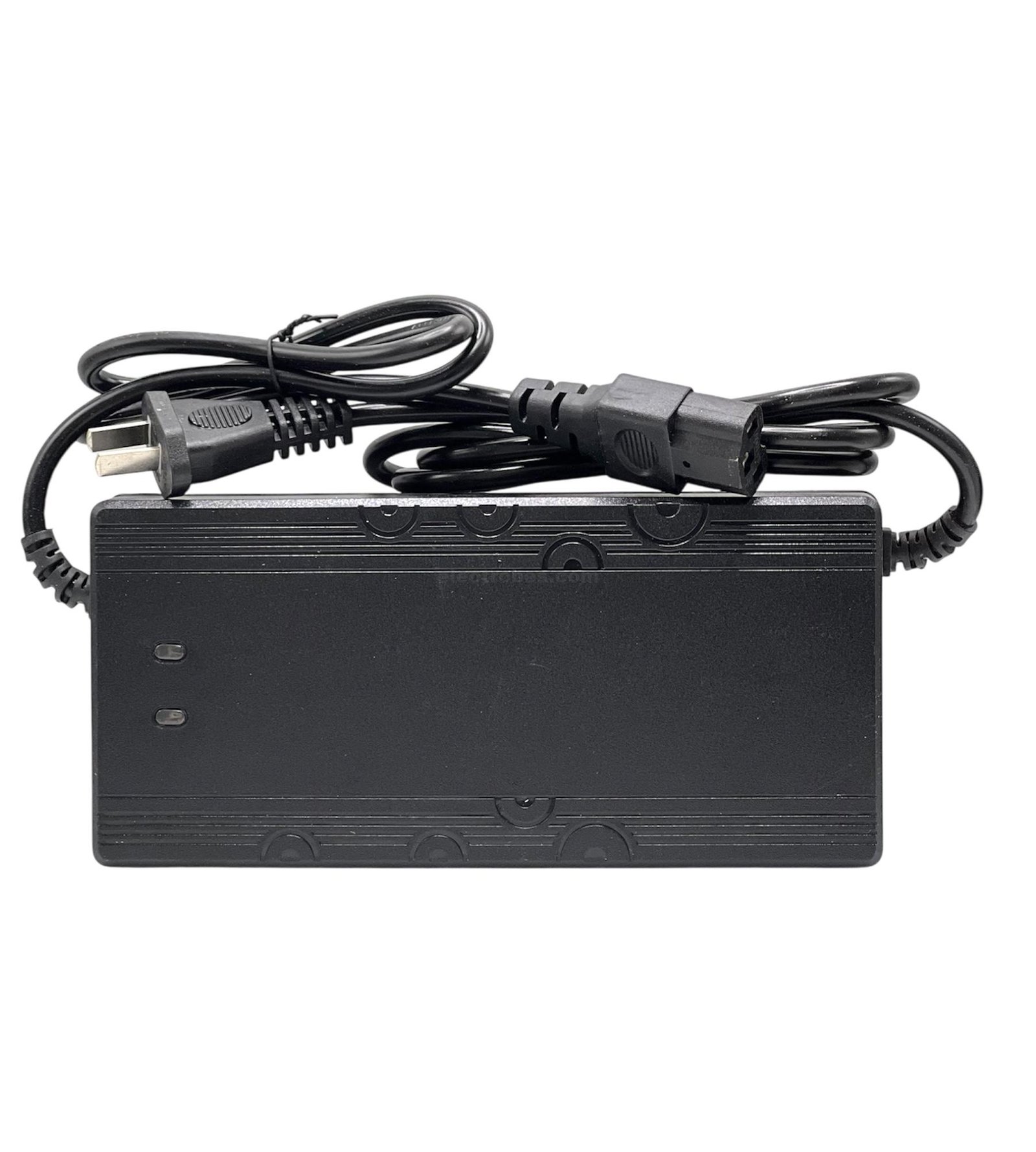
Lithium-ion cells **must never be trickle-charged**. A Lithium charger applies Constant Current until 4.20V per cell, holds Constant Voltage while current tapers to near zero, and then **abruptly shuts off completely**. Trickle charging lithium causes metallic lithium plating and internal short circuits.
3. LiFePO4: Ultra-Flat Voltage Profile
LiFePO4 cells operate at 3.2V nominal and peak at 3.65V. A 16S LiFePO4 battery reaches full charge at 58.4V. This is totally different from a 16S Lithium-ion battery (67.2V).