## Understanding Charging Voltage Curves
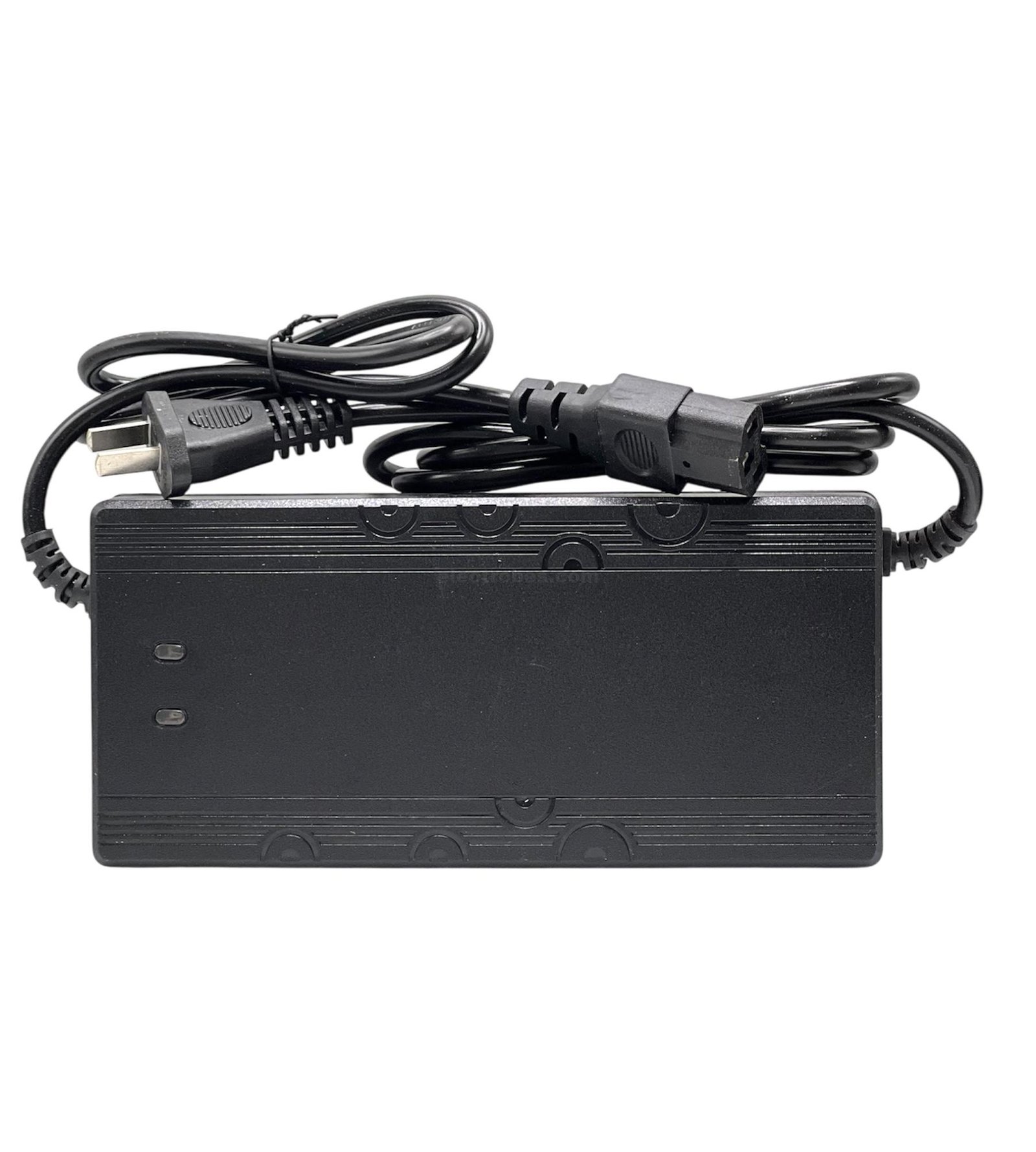
A widespread misconception among rickshaw drivers and local mechanics in Pakistan is that "any 60V charger will charge any 60V battery." This misconception is the single leading cause of premature battery degradation and fire hazards.
1. Lead-Acid / Tubular 3-Stage Profile
Lead-acid and tubular batteries require a 3-stage profile:
1. **Bulk Charge (Constant Current)**: Delivers 100% current until reaching 80% charge.
2. **Absorption Stage (Constant Voltage)**: Holds voltage at 2.45V per cell (73.5V for a 60V pack) while current gradually tapers.
3. **Float Stage (Maintenance Voltage)**: Drops voltage to 2.25V per cell (67.5V for 60V pack) to safely counteract self-discharge without boiling electrolyte.
2. LiFePO4 (Lithium Iron Phosphate) 2-Stage CC/CV Profile
LiFePO4 cells do **NOT** tolerate float voltage or desulphation pulse voltages:
- Each cell has a nominal voltage of 3.2V and an absolute upper limit of 3.65V.
- In a 60V pack (20S), maximum charge voltage is strictly **73.0V**.
- Charging beyond 73.0V or applying high float voltages will breach the BMS cutoff threshold and cause cell degradation.
3. Essential Charging Safety Rules for Fleet Depots
- **Proper Ventilation**: Lead-acid batteries release hydrogen gas during absorption stage. Depots must have cross-ventilation or exhaust fans.
- **Dedicated Breakers**: Each rickshaw charging point should be fed from a dedicated 16A C-curve miniature circuit breaker (MCB).
- **Thermal Rest**: Allow the battery pack to cool down for 30 minutes after completing a shift before plugging in the charger.